


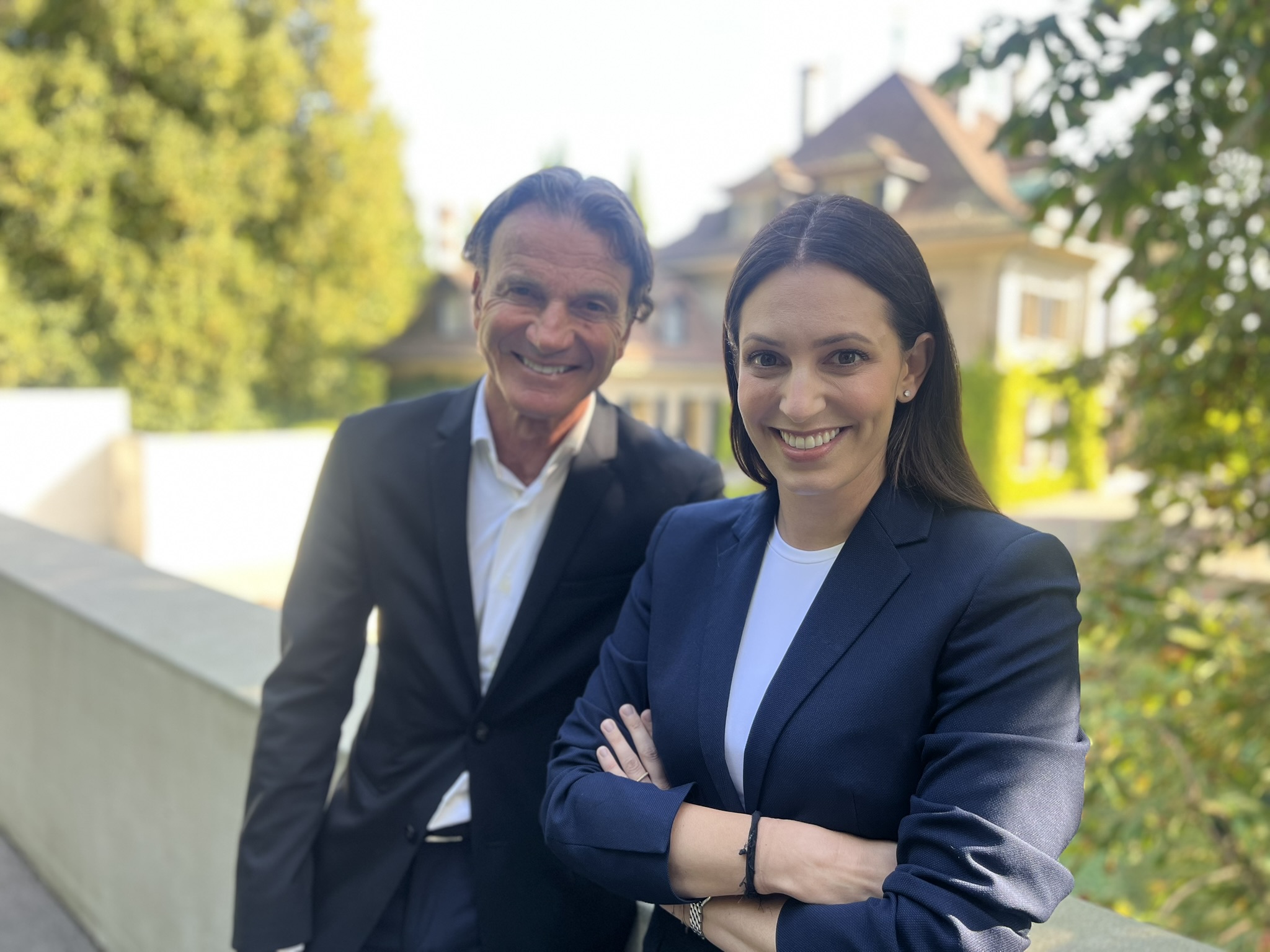
What comes next for food innovation after the hype around alternative proteins? In this conversation, Annina Winkler, Senior Investment Manager – Water & AgriFood at Emerald, speaks with Valerio Nannini, a member of Emerald’s Advisory Council and former Senior Vice-President, Head of Strategies and Performance at Nestlé.
Drawing on his experience at Nestlé and Novozymes, and his work advising startups, Valerio discusses where technology can make a difference, why corporate–startup partnerships still struggle with timing, and how the pursuit of longer, healthier lives is changing nutrition.
Annina Winkler: We were all aware of the big hype around alternative proteins, in all different kinds and forms. Then we saw a drop in investment activity and, to a certain degree, interest in the space. How would you say the whole food sector has moved over the last two or three years? Where have you seen the most significant changes?
Valerio Nannini: I think the trend towards alternative proteins is still there. It’s only the hype that has gone away.
First of all, you cannot bet on vegetarians to drive that trend. You need to go to the flexitarians. Flexitarians like to have animal proteins, but also like to have an alternative.
The major reason for that hype has gone away is that the repeat purchase has not been there. People try it. The taste is so-so. You have to compromise on a lot of other factors. And therefore, the repurchase is not there.
If the repurchase is not there, the growth these companies projected—the huge growth opportunities—has really not been at the level we wanted. If the performance of those companies is not going to go always up, up, up, the whole thing drops down. We have very good examples of companies that also did IPOs, like Beyond Meat and others.
The other point is that you need to have an alliance with some big distribution channels, and that’s where the big companies come into play. A few of them tried, but the match between the startup and those companies didn’t go well.
Annina Winkler: What about technical difficulties? Do you think this is also one of the main reasons?
Valerio Nannini: Well, undoubtedly, sensory attributes are a technical difficulty. Putting in a lot of stuff to mask some of the flavors is not the solution.
I think you start from the beginning, and that’s where precision fermentation—which has been discussed for a really long time, and where there are some GMO challenges and other types of challenges—is a way to get to parity with what we call the reference point. Right?
Particularly in the dairy industry, where prices for whey and other things are at an all-time high now, precision fermentation can play a role in specific types of proteins, not necessarily replicating milk proteins.
Technology will play a role, and that’s where a lot of investment needs to go: improving those technologies or looking at different types of attributes that could give a consumer preference. No compromise.
Annina Winkler: In that context, which technological breakthroughs do you believe could create the next generation of billion-dollar agrifood companies? Where should we look for good investments?
Valerio Nannini: I go back to precision fermentation. Fermentation is a technology. Is it a complex technology? Yes. It’s made of a series of unit operations that today are very costly. Purification is very costly.
So I believe in that area of downstream processing: if people are able to find technologies that are cheaper, that make the product more affordable and less intensive from an energy and human point of view, I think that’s an area to look at.
Even when I was working at Novozymes, we were looking at new technologies to make the products more affordable, because they were very expensive when it came to specific types of proteins.
Annina Winkler: How about AI?
Valerio Nannini: I think it’s a tool that needs to be used in this context. It can help in the early discovery of ingredients or factors that can work. You can use it for simulation, so it can cut down what we call the pre-work that needs to be done. AI is also helping in process optimization.
I think it’s a fantastic opportunity to combine traditional technology with AI and find new outcomes.
Annina Winkler: Going into the concept of open innovation, we’ve heard corporates talking about using external help so they don’t need to reinvent the wheel. How successful have corporates been over the last couple of years in really applying it?
Valerio Nannini: It’s been a seesaw, I would say. Up and down, right? Open innovation is a big, big cycle. It goes into different tasks, then comes back and gets reworked.
With AI, looking for things is much easier, and finding some unknown little company in a corner is easier. But that demands new people to deal with it. Sometimes you put a smart person in charge of open innovation inside a company and think that’s going to make the whole game. It’s a team, with different types of capabilities.
The research work is reduced because you have access to databases and other things. But cooperation and communication are not things that come with AI. Cooperation, creativity, collaboration come with a human. That’s where the people around open innovation need to be very good.
I think companies still find it very difficult to cooperate among themselves, even big companies. Imagine a big company with a small company. That’s always been the biggest issue in open innovation.
Annina Winkler: Touching on that, big companies collaborating with small companies brings issues of flexibility and totally different timelines. What do you see as the recipe for success when large corporates interact with startups? What do startups need to bring to make it easier for corporates to implement these things?
Valerio Nannini: I think the startup brings something the corporate didn’t have. It could be a technology, it could be a mindset, it could be a series of other things. And the corporate needs to bring access to a market or access to a solution that is needed, and create market value.
Where it always falls down is that the timing is different. The corporate takes its own time. The startup doesn’t have a lot of money, so it has a short runway, right?
I’ve been giving a lot of advice to startups, and you clearly see it when you present to a big company. The company has its own time, and it takes months. The startup doesn’t have months. They need to get some feedback very quickly.
So it’s not necessarily an investment. It’s a strategic partnership that’s needed to test your assumptions. If your assumptions are right, then the next phase could be an investment.
That’s where I think companies like Emerald can play a role: helping them to team up in what I call an initial strategic partnership. That’s a model that needs to change, because in that way things can be really speeded up.
Annina Winkler: Do you feel that corporates have improved over the last couple of years in collaborating?
Valerio Nannini: No, it’s just a fantasy. I look at my old days, and the problems are the same ones. We’re talking about ten years ago, when we were trying to do this in a different way.
What has been successful is creating internal startups to make things happen, as happened to me at Novozymes—or Novonesis, as it is today—where, using the company’s technology, you bring it to a new dimension. There have been a few successes. DSM is another company that did a lot of that type of work.
But for big corporates that are more consumer-facing, normally it’s easier to go and buy somebody who’s already been successful.
Annina Winkler: But you’re still hopeful about the concept of open innovation?
Valerio Nannini: Yes, because I think AI is forcing collaboration, communication and creativity to get together. Speed is very important, so there’s an adaptation to make. But it will happen, obviously, with a series of trials and errors, as it always has.
Annina Winkler: As we all know, longevity is something you’re very passionate about, both on a professional and a personal level. How do you see it transforming the food industry? Is it already transforming it, and what potential do you see?
Valerio Nannini: The idea of trying to live longer lives with great quality—or improving your output based on your input—has always been there. When I was at Nestlé, we were working on this concept already ten years ago. But we were a bit too early.
Today is the right time, because people are starting to see non-communicable diseases increasing, and a lot of cancer cases, particularly in the Western world. So the issue is not just living longer, but living longer with quality.
This whole Ozempic phenomenon is also showing that you can really reduce the quantity of what you eat, thanks to pharma. But then there can be consequences, such as losing muscle. You might be looking slimmer, but then everything else falls down, right? You don’t want that to happen.
So you need to change the way you’re eating, or supplement what you’re eating with important elements that allow you to counterbalance those things. That’s why you’re going towards specific types of nutrition. Whether you’re eating less because of Ozempic, because you’re on a diet or whatever it is, you really need a balance.
I think some of the so-called indulgent products—and you’ve seen it in the US—have gone down. This functional element of nutrition becomes a very important driver, such as prebiotics in Coca-Cola products.
You will see a bit of a change in portfolios. Some products that are purely indulgent will remain indulgent. There’s nothing wrong with having a good piece of chocolate, and even a spoonful of Nutella one day if you want. But you cannot eat it all the time, right?
There will be smaller portions. There will be more shots with health benefits. All those things are creating a new vibe in the market. And if you look at the protein space, it’s gone crazy over this last year, because of exactly that type of change in people’s behavior.
Annina Winkler: Can you identify any subsectors within longevity, or specific technologies for enabling longevity within the nutrition space?
Valerio Nannini: It’s not only a question of nutrition. It’s also a question of knowing how you’re doing, right? Measuring your performance, continuous monitoring with watches, whatever it is.
Today, you’re moving into a much more intimate process, because there are patches you put on your skin that start giving you information on how you’re doing. For example, I’m advising a company in the States that comes out of UC Davis. This is deep science coming in. They’ve managed to use an enzyme in a patch you can put on your skin that tells you whether you’re in a state of ketosis or not.
This type of feedback is needed, with technology coming in at an increasingly less invasive manner. I like to wear my watch, not another watch, right? So I’m not wearing a tracking device, but I could have another type of tracking device.
If you know where you are versus the ideal you, you can then take action to get there. You can start thinking about an avatar of yourself, with the ideal you based on your phenotype, age, sex and other people.
I think you’re starting to see these two worlds coming together, and therefore a need for nutrition that allows you to do what you want to do.
And longevity is not something you start when you’re 70. You have to start when you’re 40. Because when you’re 40, things start showing up and you need to start modifying a bit of your behavior, so you can have possibly the longest life you can, in the best way you can.
Annina Winkler: As you know, we’re mainly focused on B2B technologies and companies, rather than B2C. There are a lot of technologies that can be used directly by the end consumer. Do you also see potential for B2B in the context of longevity?
Valerio Nannini: Yes, absolutely. These are new ingredients, and B2B companies have the research and the means to execute on them.
We were talking before about proteins. If you think about this whole thing around amino acid composition, companies like Novozymes and Givaudan know how to make those things. So there will be a delegation upstream from some of the FMCG companies: get these components made, and then buy them.
For me, there’s going to be big success for B2B companies that embrace this, and at the same time for FMCG companies that create an alignment around the needs they have.
These two worlds need to work together, because nobody can afford the R&D costs required to do this type of work.
Annina Winkler: To close, is it fair to say that you see food companies evolving from providers of ingredients and nutritional foods into providers of health outcomes for the consumer? A more holistic view of not only the product they serve, but the outcome?
Valerio Nannini: Yes, you’re starting to see this in many ways. If you take Nestlé Health Science or Nestlé Nutrition, they’re doing all that: trying to cover the entire life cycle of people, from when they’re born to when they’re not there anymore—when they fly away, I would say. They do it with a series of products, be it supplements or different delivery models. You see the same thing happening with Danone.
At the same time, you cannot abandon what I call the indulgent element. The coffee, or the chocolate, or the other things. Because life is not only made of a healthy environment. It’s also made of pleasure, social moments. Those social moments come with some good habits, and we should maintain that.
But it’s all a question of balancing. And that’s where the business will go, in my opinion.
---
More from Emerald on food, water and health:
Emerald portfolio company xFarm Technologies raises €36 million
Real-time monitoring is the real deal when it comes to water management
Emerald Global Water Fund II reaches €100 million with addition of Temasek and Grundfos Foundation