


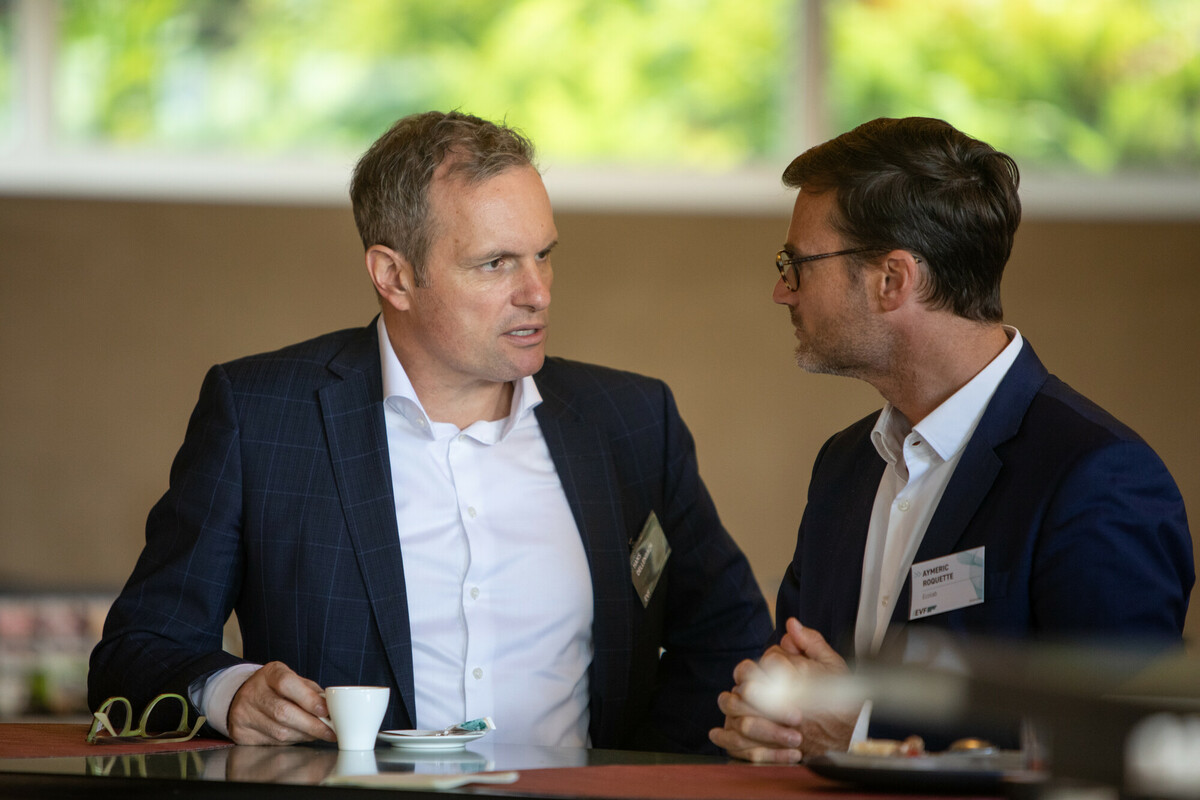
by Hans Dellenbach, Senior Partner & CFO
Over the years, I have been approached by an increasing number of family offices with the same question: "How can we invest in venture capital?"
It is an interesting question because family offices are already significant investors in alternative assets. According to UBS, alternatives now account for roughly 44% of the average family office portfolio.
When it comes to venture capital, many investors assume that the only way to gain exposure is by becoming a Limited Partner (LP) in a venture capital fund. That is certainly one option. But it is far from the only one.
In reality, there are several ways to access venture-backed technology companies, each with different trade-offs regarding diversification, control, access, time commitment and economics.
Before writing this, I asked myself a simple question:
If I were a family office looking for venture exposure today, would I commit to a VC fund, build a direct investment programme, or choose a different route altogether?
Most discussions in the market focus on the first two. Yet there is another approach that can offer an interesting balance between access, flexibility and independence: building a direct venture investment programme.
At first glance, this sounds attractive: No management fees. No carried interest. Full control over investment decisions.
So why don't more family offices invest directly into venture-backed startups?
In my experience, the challenge is rarely capital. The challenge is everything that comes before and after the investment: Generating quality deal flow; screening hundreds of companies; conducting due diligence; negotiating terms; building relationships with founders and other investors; monitoring the investment over many years.
None of this is impossible. But it requires time and expertise. And therefore a certain team size that most family offices cannot or do not want to afford.
The reality is that venture capital is both highly competitive and relationship-driven AND time-consuming. This is why many family offices eventually face a trade-off: Build an internal (costly) venture investment capability, or leverage someone else's.
Most discussions stop there and conclude that investing through a VC fund is therefore the obvious solution. But is it really the only alternative?
One approach that has gained increasing attention in recent years is co-investing alongside experienced venture capital investors. In a co-investment model, family offices invest directly into individual companies rather than into a fund. However, the opportunity is typically sourced, evaluated and often led by a professional investment manager.
For family offices, this can offer several potential advantages:
✅ No blind-pool commitment
✅ Investment decisions made on a deal-by-deal basis
✅ Access to opportunities that might otherwise be difficult to source independently
✅ The ability to build a portfolio over time while maintaining control over each investment decision
Of course, co-investing is not a free lunch. Family offices still need to perform their own assessment and decide whether an investment fits their objectives and risk appetite. But for investors looking for a balance between independence and access, it can be an interesting alternative worth exploring.
The key question then becomes:
What separates a good co-investment partner from a mediocre one?
If I were evaluating a co-investment partner, I would focus less on the individual deal and more on the questions behind the deal:
-> Is the investment manager investing alongside me?
Alignment matters. A very different dynamic exists when the investment manager has meaningful capital, reputation and long-term relationships at stake.
-> Will I have enough information to make an informed decision?
Co-investing should not mean investing blindly. Investors should have access to relevant due diligence materials, understand the investment thesis, and have the opportunity to ask questions and perform their own assessment.
-> Will there be support after the investment?
The investment decision is only the beginning. Ongoing reporting, monitoring and updates often become just as important over the life of the investment.
-> And perhaps most importantly: Will I retain the freedom to make my own investment decisions?
Many family offices value having full discretion over whether to participate in a particular investment opportunity and how much capital to commit. This flexibility is often one of the key attractions of co-investing.
In my experience, the most successful co-investment relationships combine two things that can be difficult to achieve separately:
✅ Access to attractive & pre-vetted opportunities
✅ Independence in decision-making
So to summarize, family offices can gain exposure to venture capita by:
• Investing as an LP in a venture capital fund
• Building a direct investment programme
• Co-investing alongside experienced venture investors
Each approach has its strengths and trade-offs. What struck me over the years is that many family offices are looking for something very specific:
✅ Access to attractive venture opportunities
✅ The ability to make their own investment decisions
✅ No blind-pool commitment
✅ A cost structure that is tied to actual investments rather than committed capital
This is one of the reasons why we recently decided to formalise our approach to co-investing with selected family offices.
The idea is simple: When Emerald identifies an investment opportunity and decides to invest itself - or it has already invested and prepares a follow-on round - we will first offer any available co-investment capacity to our existing LPs and mandate clients, consistent with our existing obligations and relationships. If allocation remains available, we may extend the opportunity to a selected group of family offices.
Family offices remain entirely free to decide whether they wish to participate. There is no fund commitment and no obligation to invest in future opportunities.
Where appropriate, we share relevant due diligence materials, discuss our investment thesis, facilitate interactions with the company, and provide ongoing reporting and updates following a successful investment. Co-investors invest directly into the company and on the same terms as Emerald.
For us, this approach helps us build stronger long-term relationships with investors who share our interest in technology and industrial innovation.
For family offices, it provides another way to access venture opportunities without having to build a dedicated venture investment platform from scratch.
I'd be interested to hear your perspective: How do you see the role of co-investing evolving in venture capital over the coming years?
-----
More from Hans Dellenbach:
The big flex: breaking a sacred rule of venture capital
The Flex-term Structure - a video interview
How to pick winners for a climate tech portfolio