


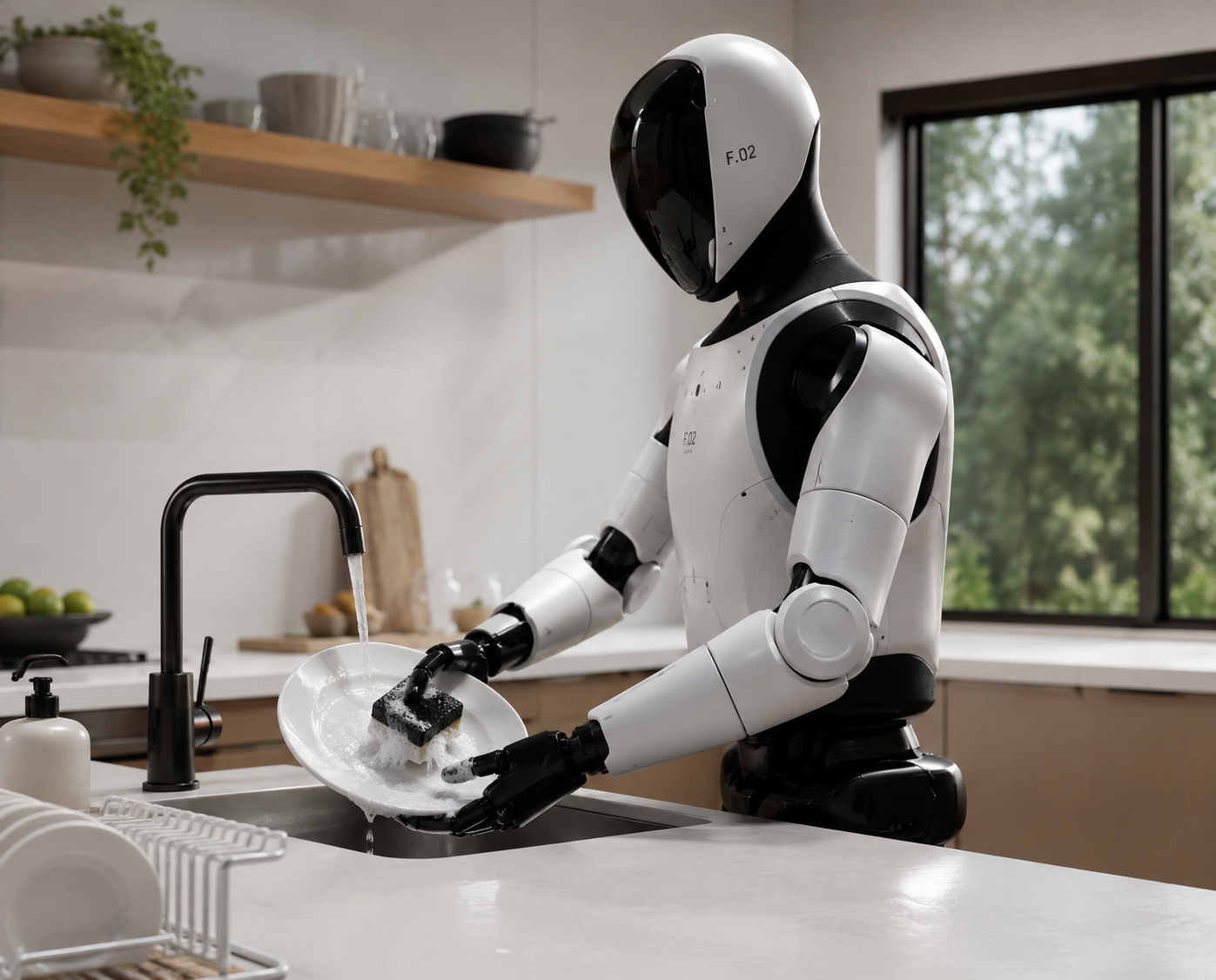
Humanoid robots have long captured the public imagination, but recent advances in artificial intelligence, robotics, and automation are transforming them from science fiction into a potential industrial reality. During Emerald's latest webinar, Mehran Zaker, Anvesh Madabushi and Stacy Brunner explored a critical question: Are humanoid robots simply a fascination, or are they becoming an economic necessity? The answer lies in a combination of technology readiness and market demand.
View the full webinar here:
Humanoid Robotics: From Fascination to Application
Why Humanoid Robots Matter Now
For decades, robots excelled only in highly structured environments, performing repetitive tasks such as welding, painting, and assembly. Today's breakthrough comes from advances in AI, particularly Vision-Language-Action (VLA) models, which allow robots to perceive, reason, and act in dynamic environments. These systems enable robots to perform tasks they have never explicitly been trained for, significantly expanding their potential applications.
At the same time, powerful economic forces are creating demand. Labor shortages have become a structural challenge across developed economies. Manufacturing reshoring efforts are increasing the need for automation, while companies continue searching for solutions to replace "3D jobs"—work that is dirty, dangerous, and difficult. These trends are creating a strong business case for flexible robotic systems.
Why Not Just Use Traditional Robots?
Specialized industrial robots remain highly effective for fixed, repetitive tasks. However, many industrial processes still require human adaptability and dexterity. Tasks such as wiring, assembly, material handling, and inspection often involve variability that traditional automation struggles to manage.
Humanoid robots—or robotic systems with human-like manipulation capabilities—offer a potential solution. Because factories, warehouses, tools, and infrastructure were designed around human workers, robots that can interact with these environments without extensive redesign gain a significant advantage. The goal is not necessarily to replace existing automation, but to complement it and fill labor gaps where flexibility is required.
The Technology Behind Physical AI
Modern humanoid robots combine three essential layers: hardware, software, and data.
On the hardware side, innovation is focused on advanced actuators, dexterous robotic hands, and tactile sensing systems that allow robots to manipulate objects with human-like precision. Hands alone can contain dozens of degrees of freedom and require sophisticated sensing to detect pressure, texture, and grip.
On the software side, foundation models are enabling robots to interpret multimodal inputs—including vision, language, and touch—and convert them into actions. This represents a shift away from rule-based programming toward more generalized intelligence.
Perhaps the biggest challenge remains data. Unlike large language models, which were trained on vast amounts of internet content, robotics lacks sufficient real-world training data. The industry is increasingly turning to a combination of teleoperation, synthetic data, and simulation environments to close this gap.
What Comes Next?
While current valuations in robotics and physical AI may reflect short-term hype, Emerald believes the long-term opportunity is real. Market forecasts project the humanoid robotics market could reach $38 billion by 2035, driven by manufacturing, logistics, and other industrial applications.
Adoption is expected to occur gradually, beginning with structured environments such as factories and warehouses before expanding into more complex settings. Success will ultimately depend on reliability, safety, economics, and the ability to integrate seamlessly into existing workflows.
The future of humanoid robots will not be defined by spectacle, but by their ability to solve real-world problems. As AI, robotics, and human-machine collaboration continue to converge, the question is no longer whether robots will become useful—it is how quickly they will become indispensable.
---
More on Industrial AI & Robotics at Emerald:
Emerald and DIC Partner via $62M Investment Platform to Accelerate Innovation in Physical AI